

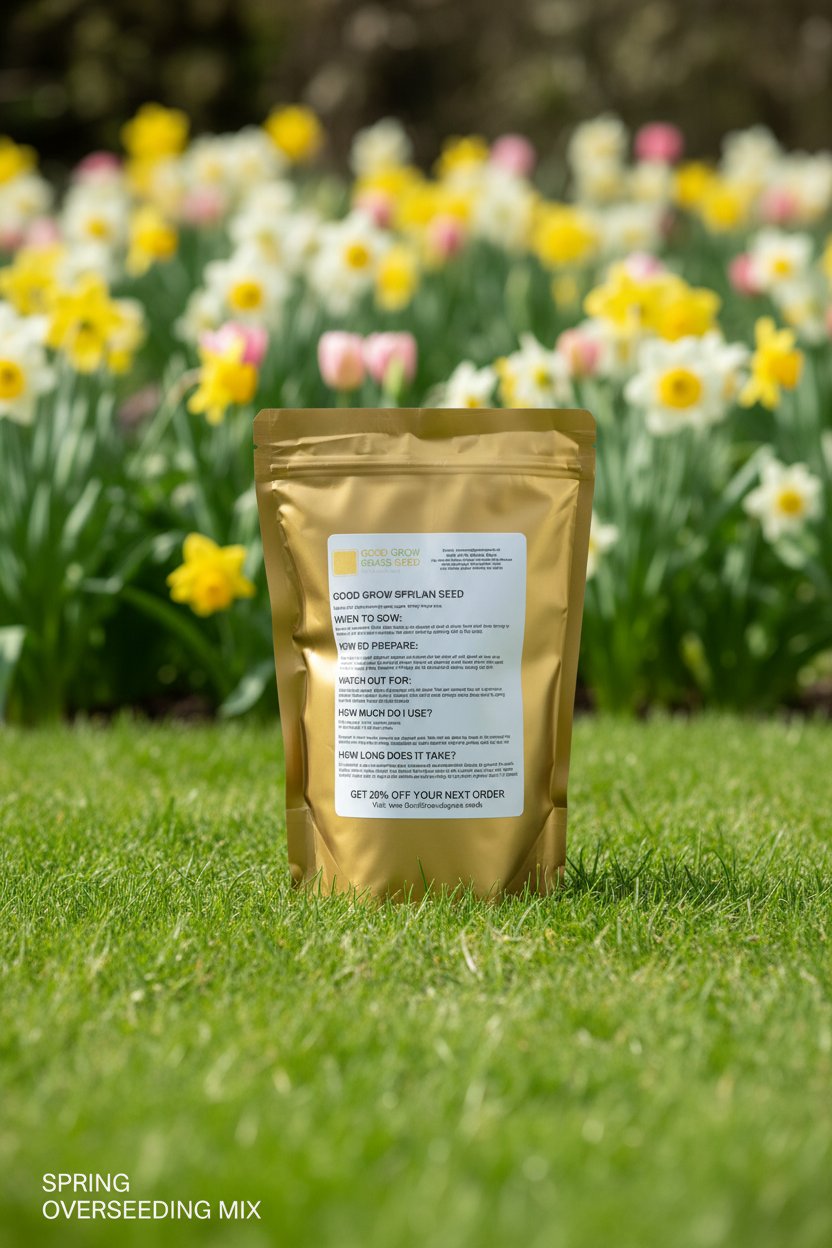
The secret to a great summer lawn? What you do right now.
Your lawn just survived winter. Barely.
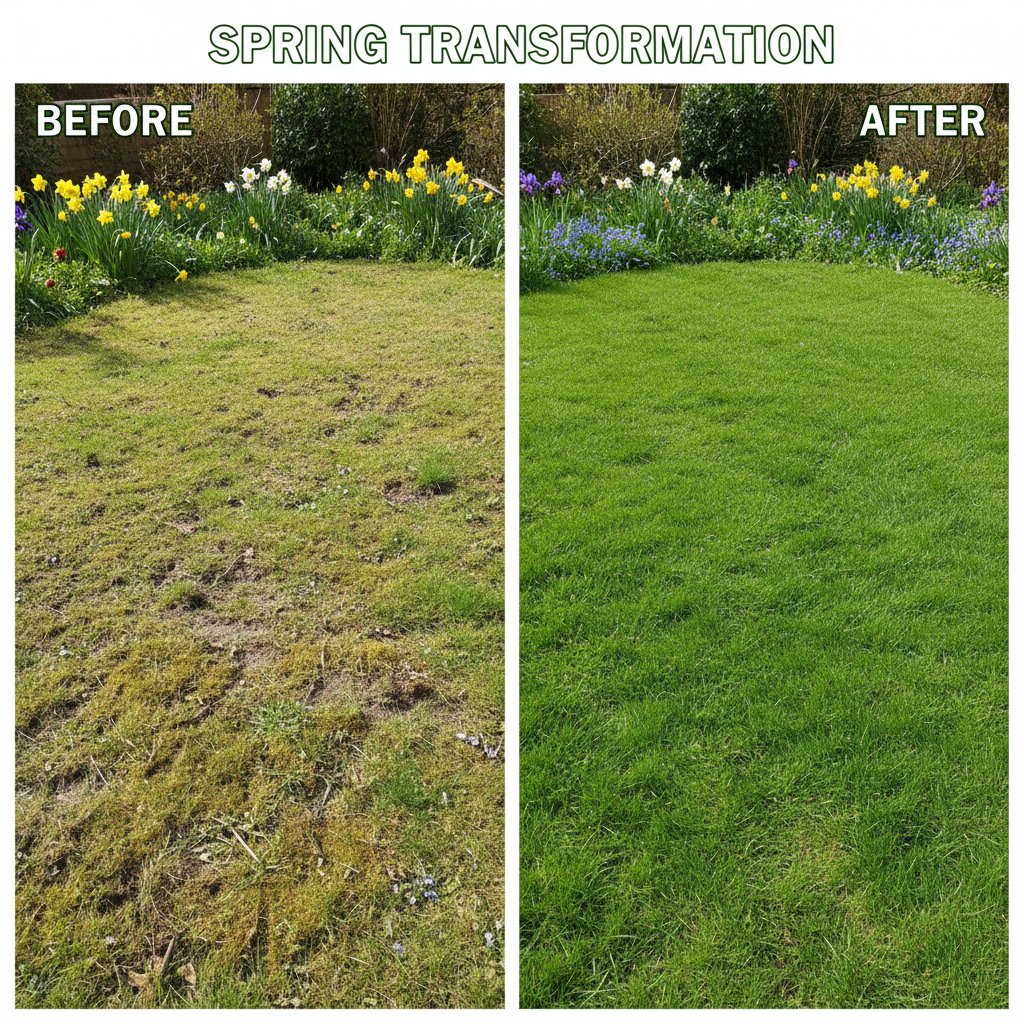
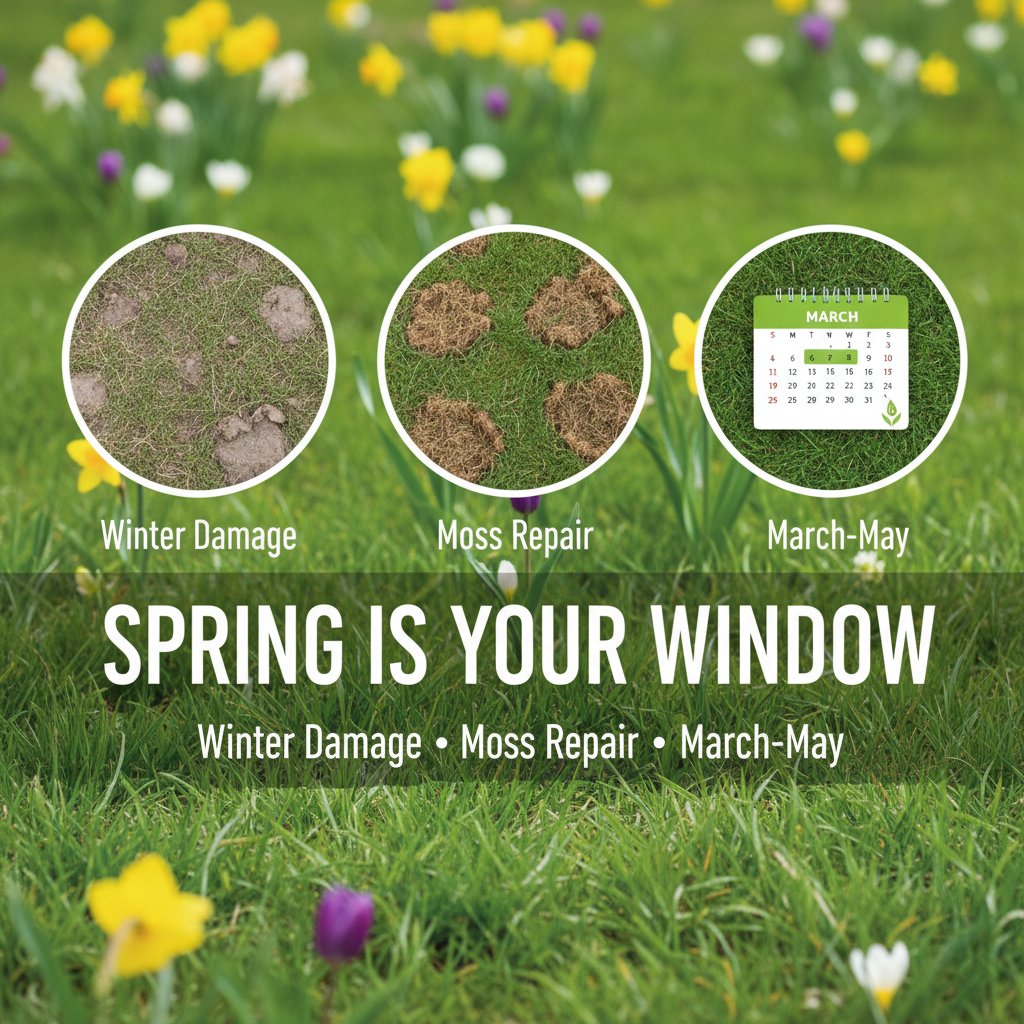
It’s looking thin. There are gaps where there shouldn’t be gaps. The moss is retreating (hopefully you’ve treated it), but it’s left bare patches behind. If you squint, you can almost pretend it looks okay.
But you know the truth. Left alone, those thin spots will become weed spots. By July, you’ll be fighting an uphill battle against a lawn that’s more dandelion than grass.
Spring is your window. Don’t waste it.
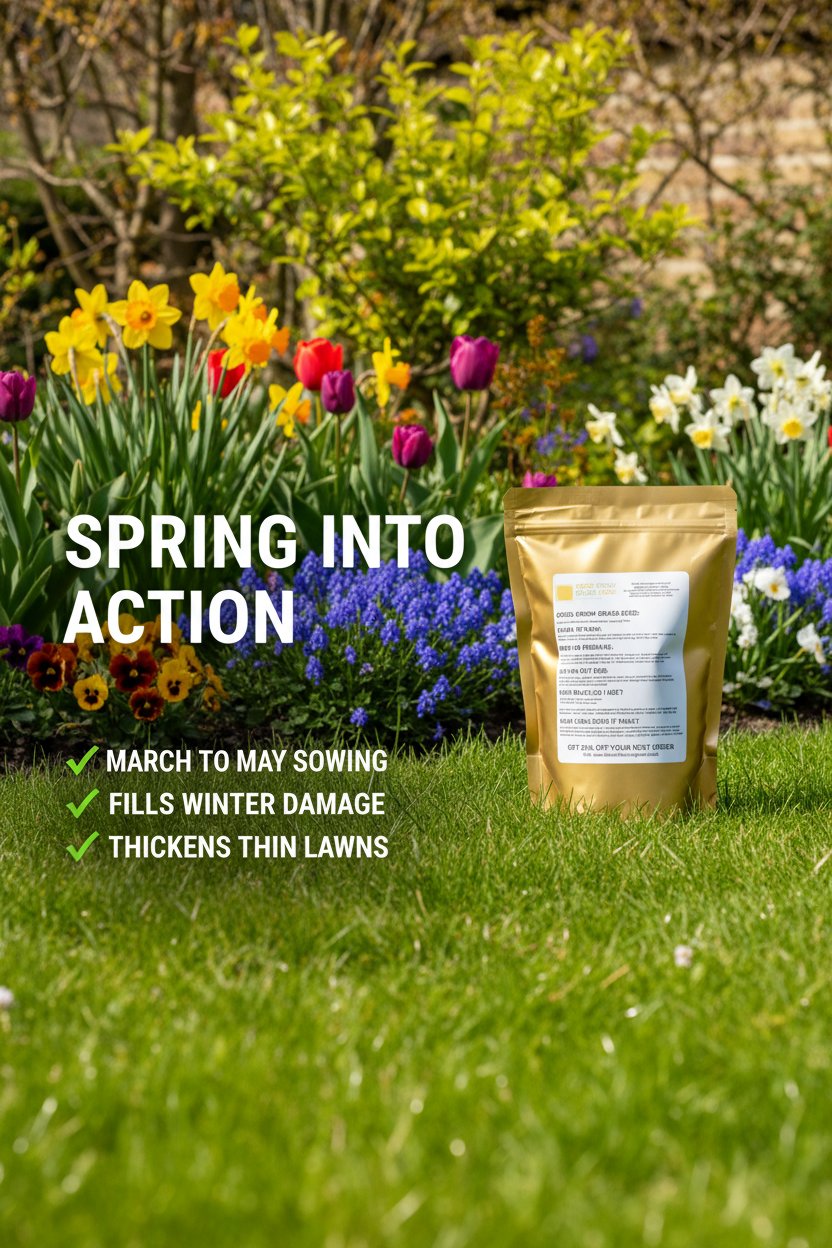
March through May is prime overseeding time. The soil is warming up, moisture levels are good, and grass is naturally coming out of dormancy and ready to grow. It’s the perfect storm for seed establishment, if you use the right seed.
Why season-specific seed matters:
Most grass seed is sold as “year-round” because it’s easier for the manufacturer. One product, one label, done. But grass germination isn’t a year-round process. Different conditions demand different approaches.
Spring Overseeding Pack is formulated specifically for spring’s conditions:
Cool-soil germination – Standard seed often struggles when soil temperature is below 10°C. Our spring blend includes varieties selected for reliable germination in cooler conditions, so you can start earlier and establish faster.
Competition-ready – In spring, your existing grass is waking up and growing. New seed needs to compete. This blend establishes aggressively to hold its own against existing growth and emerging weeds.
Pre-summer establishment – The goal is thick, healthy grass before summer heat arrives. This means faster establishment, not just fast germination.
When to sow:
March: Ideal if you’re post-scarification and want maximum growing time before summer. Soil temps are usually around 8-10°C.
April: The sweet spot for most UK gardens. Soil is warmer, weather is more settled, and there’s plenty of growing season ahead.
Early May: Still effective, but don’t leave it later. You want the grass established before any hot, dry spells hit.
Perfect for:
- Post-winter lawn thickening
- After scarification or moss treatment
- Filling gaps before weeds appear
- Reinforcing thin or tired lawns
- Getting your lawn summer-ready
How to use:
- Mow existing lawn short (but don’t scalp it)
- Scarify or rake to remove thatch and debris
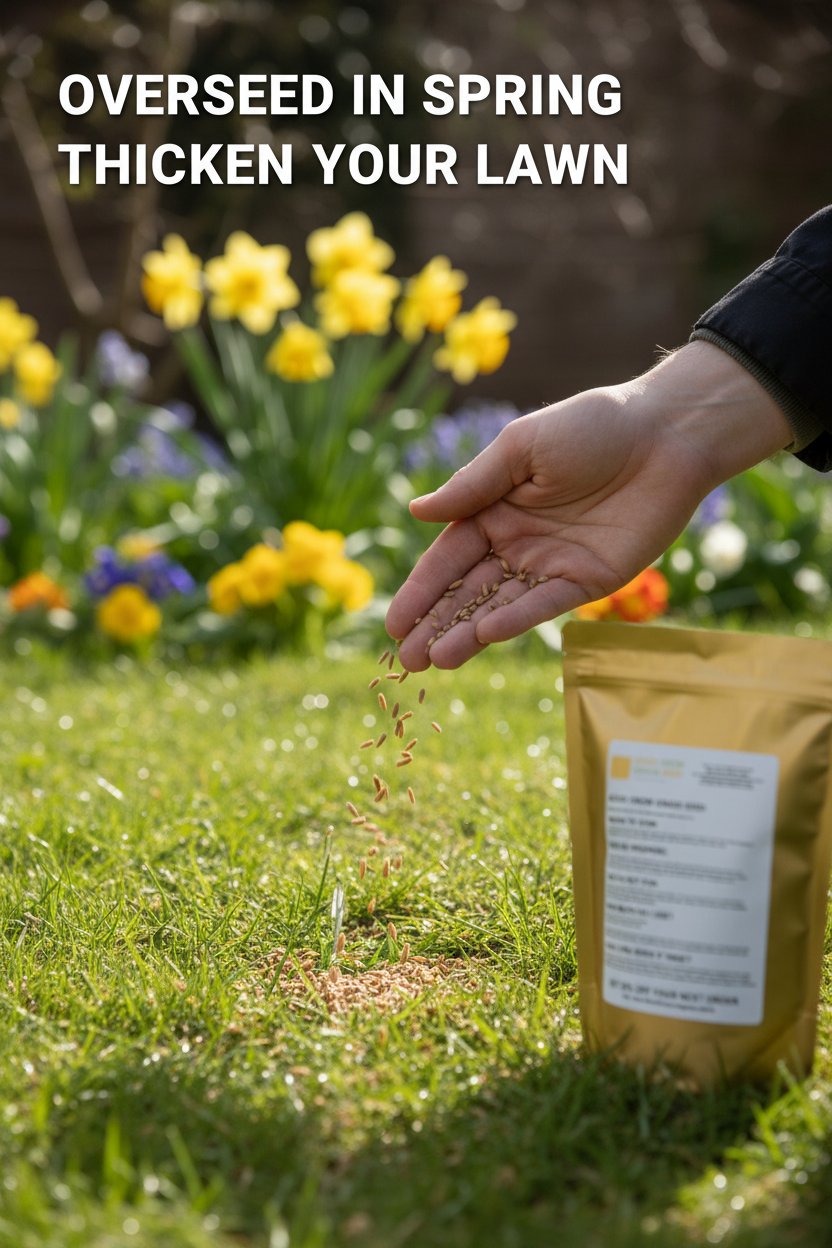
- Scatter seed evenly over thin areas
- Work seed into the surface with a rake
- Water well and keep moist for 2-3 weeks
Coverage tip: For overseeding, use approximately half the rate you’d use for a new lawn. You’re filling gaps, not starting from scratch.
Spring waits for no one. Neither should you.
Key Specifications
| Germination time | 10 to 14 days (typical spring conditions) |
| Sowing rate (overseeding) | 15 to 25g per m² |
| Sowing rate (bare soil) | 35 to 50g per m² |
| Best sowing window | March to early May |
| Min soil temperature | 8 to 10°C |
| Full establishment | 6 to 8 weeks |
| First mow height | 7 to 10cm (then reduce gradually) |
| Pet safe | Yes, after establishment |
 Spring Lawn Seed | March-May Overseeding & Thickening


The winter of 2024 was brutal on our lawn. Waterlogged for months then frozen solid. Come spring it was more mud than grass. Good Grow Spring seed has brought it back from the dead. Three months on and you would never know how bad it was. Genuinely transformed.

Did a full spring renovation this year. Scarified hard in March, overseeded with Good Grow and fed. The results by late May were incredible. The lawn went from looking exhausted to looking like new. The seed germinated evenly and the grass came through strong and thick.

Sowed at the start of April and by early June had a lawn that was thick enough to handle the kids playing on it. The growth rate was impressive for a spring sowing and the grass has a lovely healthy colour. We are having garden parties on it already and it looks brilliant.

That was my main goal and it worked perfectly. The lawn was full of thin spots after winter and I knew the weeds would move in if I did not act fast. Sowed this in early April and the grass established quickly enough to crowd out any weed seedlings. Lawn looks uniform and healthy now.

I always struggle with annual meadow grass invading my lawn in spring. This year I got ahead of it by overseeding with Good Grow in March. The strong germination meant the lawn filled in before the weed seeds had a chance. Lawn looks cleaner and healthier than it has in years.

After a rough winter our lawn was looking thin and tired with bare patches appearing everywhere. Sowed Good Grow Spring seed in mid-March and despite some cold nights it germinated within two weeks. By the end of May the lawn was thick and green and ready for the BBQ season. Exactly what it promised on the packet.

The seed germinated fine but I found it needed more watering than I anticipated given the spring rain we usually get. We had a dry April this year and I had to water daily for the first two weeks to keep things going. Once established it looks great though. Just be prepared to water if spring is dry.

I split the bag and sowed half in mid-March and half in mid-April. The March sowing took about three weeks to show and was a bit patchy. The April sowing came through in under two weeks and was much more even. Still a good product but I would say wait until April if you can for best results.

Every spring I look at my lawn and wonder where half of it went over winter. This year I overseeded with Good Grow Spring mix in early April and the difference is remarkable. The thin patches have filled in completely and the whole lawn has a density it has not had in years. Should have done this sooner.

Does what it says. Germinates reliably in spring temperatures which is not something every seed manages. The lawn has thickened up nicely and looks healthy going into summer. Straightforward product that delivers.

I was worried the new grass would look different from the existing lawn but it matched perfectly. No colour difference or texture mismatch. Within a few mows you genuinely cannot tell where the overseeding was done. That seamless blend is exactly what you want.

What impressed me was how reliably this germinated even though the soil was still quite cool in late March. Other seeds I have tried in spring barely did anything until May. This was showing growth within ten days despite night temps around five degrees. Clearly bred for early season conditions.
Frequently Asked Questions
Q: How much is delivery?
A: Free
Q: How long does delivery take?
A: 1-3 working days
Q: Why do I need a specific “spring” seed, won’t any grass seed work?
A: Spring brings unique challenges: cooler soil temperatures, competition from waking grass, and emerging weeds. This blend contains varieties selected for reliable germination in cooler spring conditions (8-10°C soil temp) and aggressive establishment to compete with existing growth.
Q: When exactly should I sow in spring?
A: March to early May is ideal, with April being the sweet spot for most UK gardens. Wait until soil temperatures reach at least 8-10°C consistently. Don’t sow if frost is forecast in the coming days.
Q: Is it too late to sow in May?
A: Early May is still fine. Beyond mid-May, rising temperatures and potential dry spells make establishment harder. If you’ve missed the window, consider waiting for autumn or ensure you can commit to regular watering through any warm spells.
Q: Should I scarify before spring overseeding?
A: Yes, if your lawn has thatch buildup or moss. Scarifying removes dead material and improves seed-to-soil contact. Do this 2-3 weeks before overseeding so the existing lawn recovers slightly. If your lawn is in good condition, a thorough rake may be sufficient.
Q: How much seed do I need for overseeding?
A: For spring overseeding, use approximately half the rate you’d use for bare soil, around 15-25g per square metre. You’re filling gaps, not starting from scratch. Heavier overseeding wastes seed and can create competition issues.
Q: Can I use weed killer before overseeding?
A: Wait at least 4-6 weeks (check product label) after applying weed killer before sowing seed. Pre-emergent herbicides will prevent grass seed germination just as they prevent weed seeds. Time your weed treatment for late autumn or early spring, well ahead of seeding.
Q: Will spring-sown grass survive summer heat?
A: If established before hot weather arrives, yes. The goal is thick, rooted grass by June. Grass sown in early spring has 8-12 weeks to establish before summer stress. Late spring sowing has less buffer time, so watering becomes more critical.
Q: Do I need to feed my lawn when overseeding?
A: A spring lawn feed applied at the same time as seeding helps both existing grass and new seedlings. Choose a balanced fertiliser or one slightly higher in phosphorus to promote root development. Avoid very high nitrogen feeds that favour established grass over seedlings.
Q: How long until I can mow after spring overseeding?
A: Wait until new grass reaches 7-10cm before the first cut (typically 3-4 weeks). Set your mower high and only remove the top third of the blade. Mowing too soon or too short damages tender seedlings.
Q: My lawn looked terrible after winter, should I reseed the whole thing?
A: Usually, overseeding is sufficient unless more than 50% of grass is dead. Existing grass recovers quickly in spring warmth, and overseeding fills the gaps. For severely damaged lawns, consider a full renovation with bare soil seeding rates.
Q: Can I apply moss killer and seed at the same time?
A: No. Apply moss killer, wait for the moss to die (usually 2-3 weeks), rake out the dead moss, then overseed. If you seed over moss, the new grass won’t reach soil and won’t establish.
Q: What if it’s a dry spring, how much should I water?
A: In dry conditions, water newly seeded areas lightly 2-3 times daily for 5-10 minutes to keep soil moist but not waterlogged. Once grass is established (about 3 weeks), reduce to deeper, less frequent watering. Spring typically provides adequate rainfall, but don’t rely on it.
Q: Should I roll the lawn after spring overseeding?
A: Light rolling or treading helps ensure seed-to-soil contact, which is essential for germination. Don’t use a heavy roller that compacts soil. Walking over the seeded area in normal shoes is often sufficient for small areas.
Wondering if you’ve missed the window?
If the ground isn’t frozen and you can commit to watering, there’s still time. Spring is forgiving, get seed down now and you’ll see results before summer. And if conditions don’t cooperate? Our 30-day guarantee has you covered. Don’t wait for “perfect”, good enough is good enough.
💬 Questions? Email us at [email protected]