
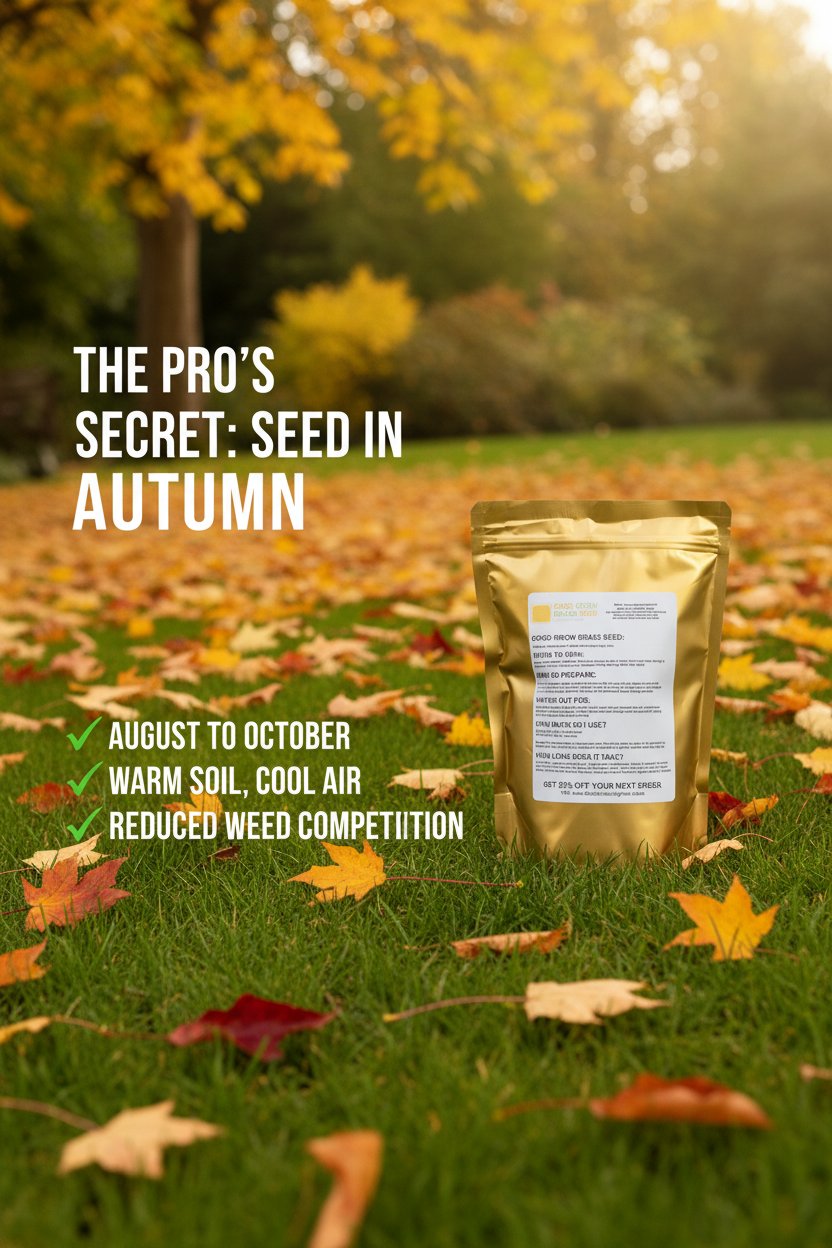



Ask any groundskeeper when they seed. The answer is always autumn.
There’s a reason Premier League pitches get renovated in late summer. A reason golf courses overseed in September. A reason professional landscapers schedule their biggest projects for autumn.
It works.
Warm soil from summer. Cool, moist air. Reducing weed competition. Longer establishment window before dormancy. Autumn isn’t just a good time to overseed, it’s the best time.
And yet most homeowners wait until spring.
They see the damage in March and panic-buy grass seed. By then, they’re fighting weeds, dealing with unpredictable weather, and racing against summer heat. The smart move? Fix it now, while conditions are perfect.
Why autumn overseeding outperforms spring:
Soil temperature – Seeds germinate based on soil warmth, not air temperature. In autumn, the soil retains summer’s heat even as the air cools. This warmth persists well into October, giving seeds ideal germination conditions.
Moisture consistency – Autumn dew and regular rainfall keep seeds consistently moist without the washout risk of spring storms or the drought risk of summer. Less watering, better results.
Reduced weed competition – Most lawn weeds are winding down for winter. Your new grass faces far less competition than it would in weed-happy spring.
Root development – Grass established in autumn spends the winter developing deep root systems. When spring arrives, it doesn’t need to establish, it’s ready to explode with growth. The result? A thicker, healthier lawn than spring-sown grass achieves in the same timeframe.
The summer damage repair window:
Look at your lawn right now. See those tired patches? The worn areas from summer use? The spots that struggled through dry spells?
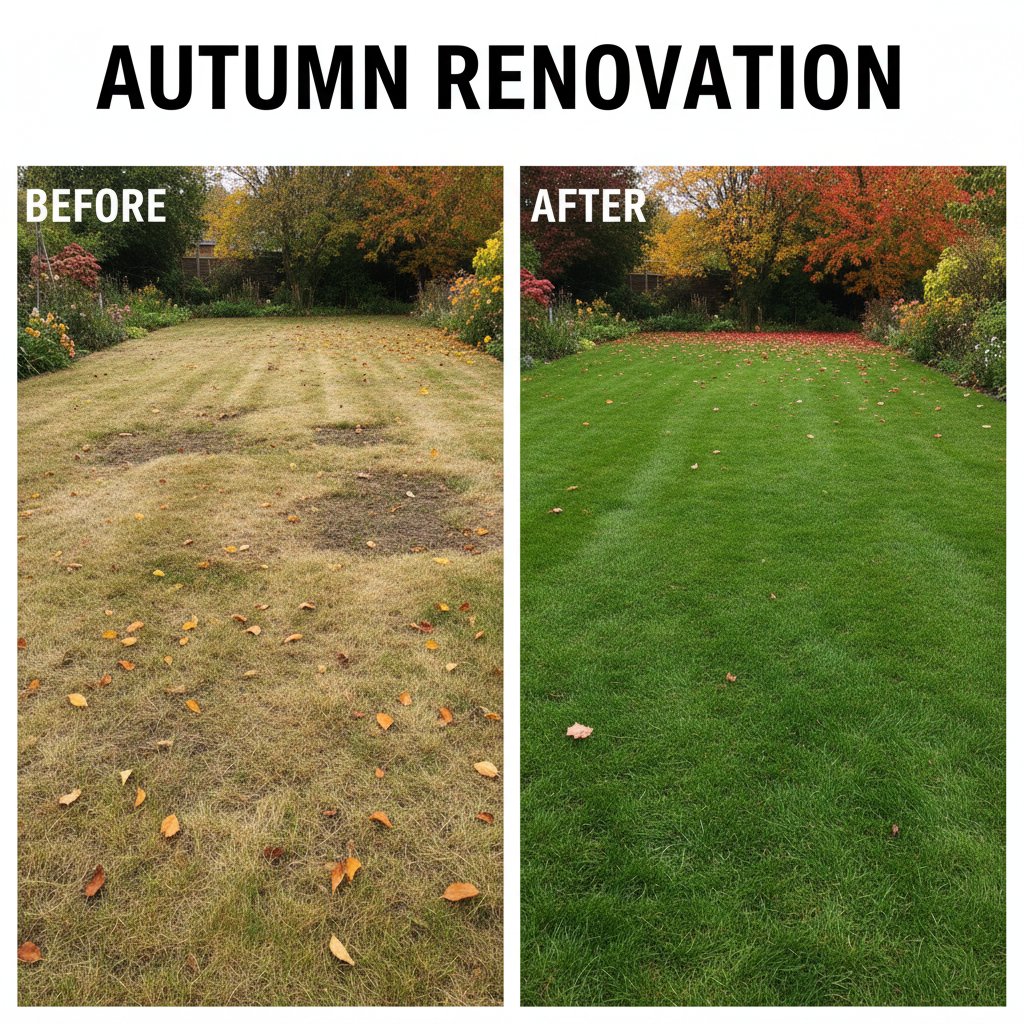
This is your chance to fix them properly. Not a temporary patch job, a genuine renovation that establishes before winter and delivers results you’ll actually notice come spring.
When to sow:
Late August: Ideal if you’ve had a harsh summer and want maximum recovery time. Soil is at peak warmth.
September: The sweet spot. Warm soil, cooling air, and usually reliable moisture. This is when the professionals do their work.
Early October: Still effective, but don’t push much later. Grass needs 4-6 weeks of growing weather before winter slowdown.
Perfect for:
- Post-summer lawn renovation
- Repairing drought damage
- Overseeding after scarification
- Preparing lawns for winter
- Getting ahead of spring (seriously, you’ll thank yourself)
How to use:
- Mow lawn short, lower than normal to let light reach the soil
- Scarify to remove summer thatch and debris
- Aerate if soil is compacted from summer use
- Scatter seed evenly over the entire lawn or target thin areas
- Light top-dressing optional but beneficial
- Water if rainfall doesn’t cooperate
The payoff: You do the work now, in pleasant autumn weather. The grass establishes while you’re not really paying attention. Then spring arrives, and your lawn looks better than ever. That’s the autumn advantage.
Don’t wait for spring to notice the problem. Fix it now.
Key Specifications
| Germination time | 7 to 14 days (warm autumn soil) |
| Sowing rate (overseeding) | 15 to 25g per m² |
| Sowing rate (bare soil) | 35 to 50g per m² |
| Best sowing window | Late August to early October |
| Min soil temperature | 10°C+ |
| Full establishment | 4 to 6 weeks before winter dormancy |
| Recommended mowing height | 5cm+ during establishment |
| Pet safe | Yes, after establishment |
 Autumn Lawn Seed | August-October Renovation & Repair
| 5 star | 80% | |
| 4 star | 20% | |
| 3 star | 0% | |
| 2 star | 0% | |
| 1 star | 0% |


The seed germinated quickly in September and the lawn looks healthy going into winter. The real test will be spring when it should come back strongly thanks to the root system it has built over autumn and winter. Early signs are very positive. The grass is green and dense even in December.

Bit ironic but my lawn genuinely looks better in November than it did in July. The autumn renovation with Good Grow has thickened it up and the colour is a deep healthy green. Summer stress is completely gone. Looking forward to seeing how it comes through in spring.

I can already tell this grass has established a strong root system. When I gently tug at the new growth it is firmly anchored. That is exactly what I wanted going into winter. The idea is that come spring it will explode with growth because the roots are already in place. So far everything is going to plan.

Used this as part of a full autumn lawn renovation. Scarified, aerated, seeded and fed. The results are excellent. The lawn has gone from tired and thin to thick and green in about six weeks. Good value for the coverage you get from the bag.

I left it a bit late and did not get the seed down until mid-October. Growth was slower than I hoped and some areas are still a bit thin. The sections that did germinate look healthy but I think I missed the ideal window. Would recommend getting it down in September if you can. The seed itself seems good quality.

After years of spring sowing with mediocre results a friend told me autumn is when the professionals do it. Bought Good Grow Autumn seed and sowed in early September. The warm soil and cooler air meant germination was incredibly fast. Within a week I had growth everywhere. By November the lawn was thick and established with deep roots going into winter. Why did nobody tell me this sooner.

What impressed me most was how evenly this germinated. No patchy areas or bare spots. The whole lawn came through at roughly the same rate which gave a very uniform result. That consistency suggests a high quality seed mix with a good germination rate.

I work in grounds maintenance and autumn is when we do all our renovation work for good reason. The conditions are ideal for seed establishment. This Good Grow mix performed very well across several gardens I used it on. Consistent germination and strong establishment before the cold set in. Would use again professionally.

I have always sown grass seed in spring and wondered why results were inconsistent. Tried autumn sowing for the first time this year with Good Grow and the difference is staggering. Faster germination, more even coverage and the grass looks healthier. Autumn sowing is the way forward and this seed is perfect for it.

Our lawn took a battering over the summer. Between the drought, the kids and general wear it was looking rough by August. Scarified and overseeded with Good Grow Autumn mix in early September and the transformation was rapid. The bare patches filled in within three weeks and the thin areas thickened right up. Lawn went into winter looking better than it did at the start of summer.

This is my third consecutive autumn using Good Grow for overseeding and my lawn improves every year. The cumulative effect of annual autumn renovation is remarkable. The lawn is now the best it has ever been. Thick dense and a beautiful colour. Autumn overseeding with quality seed is the secret to a great lawn.

After one of the driest summers on record our lawn was scorched brown and patchy. Waited for the September rain then sowed Good Grow over the entire lawn. The combination of moisture and warm soil meant germination was rapid and even. Six weeks later the lawn looks completely renewed. The scorched patches are gone.

We had a warm September with regular rainfall which is exactly what grass seed wants. Good Grow took full advantage and germinated fast and evenly. I barely had to water it because nature did the job. The lawn is now thick and well rooted heading into winter. Could not ask for more.

We had a paddling pool and garden furniture sitting on the lawn all summer and when we packed it away in September there were big yellow rectangles everywhere. Sowed Good Grow Autumn seed on those areas and within three weeks they had completely recovered. You cannot tell where the furniture sat now.

I have tried sowing grass in spring and autumn and autumn wins every time. The soil is still warm from summer so germination is much quicker. Good Grow Autumn seed took advantage of that perfectly. Growth was visible in under a week which is faster than anything I have managed in spring. The seed quality is clearly good too.
Frequently Asked Questions
Q: How much is delivery?
A: Free
Q: How long does delivery take?
A: 1-3 working days
Q: Why is autumn considered the best time to overseed?
A: Three reasons: (1) Warm soil from summer promotes fast germination, (2) Cool air and autumn rainfall create ideal growing conditions with less watering needed, and (3) Weeds are winding down, so new grass faces less competition. Professional groundskeepers do the majority of their reseeding in autumn for these exact reasons.
Q: When exactly should I sow in autumn?
A: Late August to early October is ideal, with September being the prime window. Soil is still warm (above 10°C), air temperatures are cooling, and autumn rain helps with establishment. Don’t sow too late, grass needs 4-6 weeks of growing weather before winter dormancy.
Q: Is it too late to sow in November?
A: Generally yes. By November, soil temperatures drop below the threshold for reliable germination, and grass won’t have time to establish before winter. Seeds may sit dormant and germinate in spring, but results are unpredictable. If you’ve missed autumn, wait for March.
Q: Should I scarify before autumn overseeding?
A: Yes, autumn is the perfect time for scarification. Scarifying removes summer thatch buildup and moss, creating the ideal seedbed. Scarify first, wait a few days for the lawn to recover slightly, then overseed. The combination is powerful.
Q: Can I aerate and overseed at the same time?
A: Absolutely. Aeration and overseeding together is a classic autumn renovation combination. Aerate first to relieve compaction, then overseed. Some seed will fall into the aeration holes, which creates perfect germination pockets with soil contact and protection.
Q: What about falling leaves, won’t they smother the seed?
A: Yes, leaves can be a problem. Remove fallen leaves regularly (gently, to avoid disturbing seed) until grass establishes. A light covering of leaves is fine, but heavy layers block light and encourage fungal problems. Consider timing to sow before heavy leaf fall if possible.
Q: How long until the new grass is established before winter?
A: Grass sown in September typically establishes within 4-6 weeks, well before winter dormancy in November/December. This allows root systems to develop, giving you a head start on spring growth.
Q: Will my autumn-sown grass survive winter?
A: Yes, grass established before winter develops strong root systems during the cold months (even though top growth stops). Come spring, this grass is ready to grow immediately, giving you a thicker, healthier lawn than spring-sown grass achieves in the same timeframe.
Q: Do I need to water autumn-sown seed?
A: Usually less than spring sowing, thanks to autumn dew and rainfall. However, if you hit a dry spell (increasingly common in September), water lightly 1-2 times daily until rain returns. Don’t assume nature will do all the work.
Q: Should I apply fertiliser with autumn seed?
A: Yes, an autumn lawn feed helps both existing grass and new seedlings prepare for winter. Choose a fertiliser lower in nitrogen and higher in potassium, which promotes root strength and winter hardiness rather than soft top growth.
Q: How do I protect autumn seedlings from heavy rain?
A: Autumn downpours can wash seed away or cause waterlogging. Ensure good drainage before sowing. If heavy rain is forecast immediately after sowing, consider covering small areas with fleece. On slopes, seed may need light raking to redistribute after storms.
Q: Can I still mow while autumn seed establishes?
A: Mow existing grass carefully, keeping blades high (5cm+) to avoid disturbing seedlings. Wait until new grass reaches 7-10cm before including it in your mowing. Reduce mowing frequency as growth naturally slows in autumn.
Q: What’s the advantage of autumn over spring for renovation?
A: Autumn-sown grass develops roots all winter, then explodes with growth in spring, giving you a thick lawn faster than spring sowing, which has to establish AND grow in the same season. Plus, reduced weed competition in autumn means more resources for your grass.
“Is it too late?”
If it’s before mid-October, you’re golden. This is exactly when the professionals sow. Autumn-established grass develops stronger roots over winter than spring-sown seed ever does. Worried about timing? Our 30-day guarantee covers you. Get it in the ground now and thank yourself in March.
💬 Questions? Email us at [email protected]