
Weeds Grow Faster Than Your Vegetables
Every weed in your vegetable patch is stealing from your crops. The problem? You can’t just spray everything like you would a driveway. Vegetables need a different approach – one that kills weeds without contaminating your food.
Weeds are the biggest frustration for vegetable growers. You spend hours preparing beds, sowing seeds, and nurturing seedlings – then watch helplessly as common UK weeds like chickweed, groundsel, and fat hen muscle in and start outcompeting your crops.
The challenge with vegetable gardens is that your usual weed control options are limited. You can’t blanket-spray with glyphosate when there’s food growing nearby. And unlike lawns, you can’t use selective herbicides – they’d kill your vegetables along with the weeds.
That leaves you with manual methods, barriers, and timing. Get these right, and keeping weeds under control takes minutes a day rather than hours at the weekend.
Why Vegetable Gardens Are Weed Magnets
Vegetable patches create perfect conditions for weeds. You’ve prepared fertile, well-watered soil – exactly what weed seeds need to germinate. You’ve cleared competing plants – giving weeds clear space to establish. And you’re constantly disturbing the soil through planting and harvesting – bringing buried weed seeds to the surface where they can sprout.
The weeds you’ll encounter fall into two categories. Annual weeds like chickweed, bittercress, and groundsel germinate, flower, and set seed within weeks. They’re easy to kill but produce thousands of seeds that persist in soil for years. Perennial weeds like bindweed, couch grass, and docks are harder to eliminate because they regenerate from root fragments left in the soil.
Both types compete directly with your vegetables for water, nutrients, and light. They also harbour pests and diseases that can spread to your crops.
What Doesn’t Work
Ignoring weeds for even a week is a mistake. Small seedlings that would take seconds to hoe become established plants with extensive root systems. By the time weeds are visible above your vegetables, they’ve already been stealing resources for days.
Waiting until you “have time” for a big weeding session means you’re always playing catch-up. Weeds that have set seed have already won – you’ve added years of future problems to your soil.
Using herbicides carelessly around vegetables risks contaminating your food. Even “safe” organic options like concentrated horticultural vinegar can damage vegetable plants if spray drifts onto leaves. The only safe time to use weed killer in a vegetable area is before planting, to clear the ground completely.
Methods That Actually Work
The 10-Minute Daily Habit
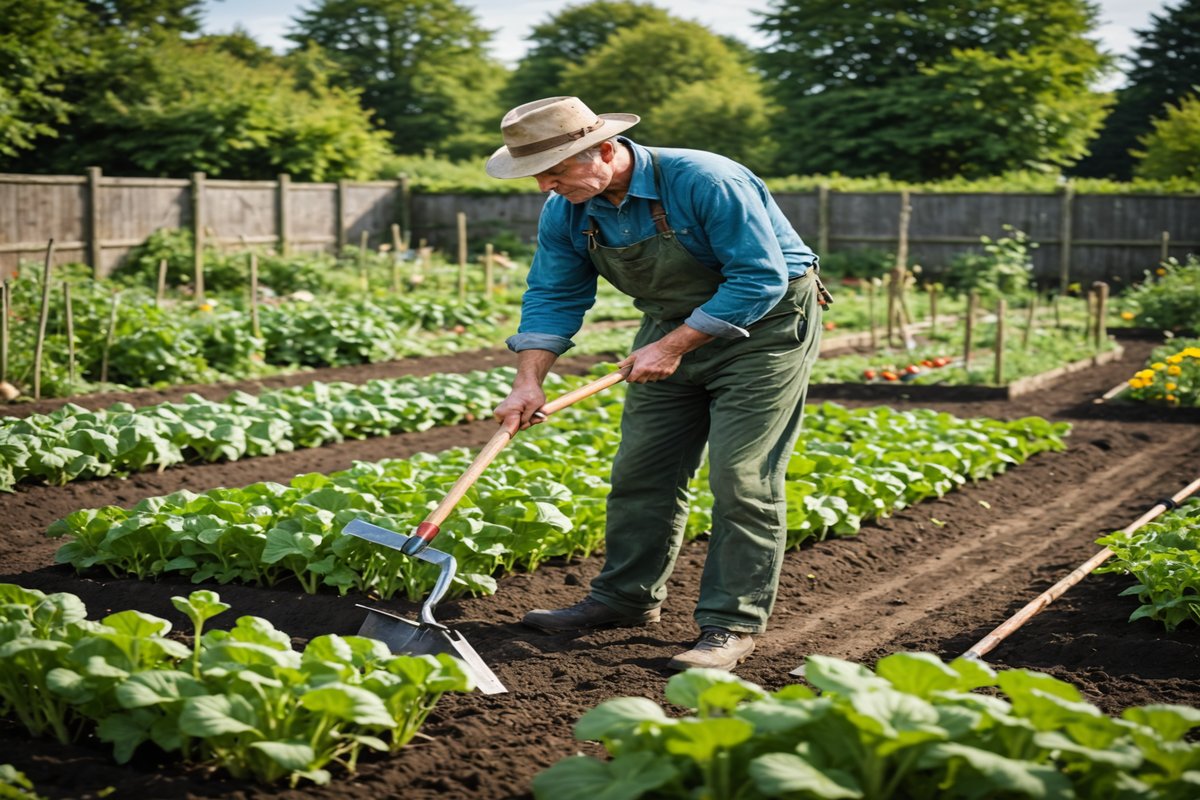
The single most effective approach is spending 10 minutes every day in your vegetable garden with a hoe. This sounds tedious, but it’s far less work than a two-hour weekend weeding session – and far more effective.
A sharp Dutch hoe slices through weed seedlings just below the soil surface. Work on a dry day and the severed weeds shrivel in hours. Do this daily and you’ll catch weeds before they establish proper root systems, before they compete seriously with your crops, and before they set seed.
The key is doing it every day, not waiting until weeds are visible. You’re killing weed seedlings before they emerge, not fighting established plants.
Mulching
A thick layer of mulch between your vegetables blocks light from reaching the soil, preventing most weed seeds from germinating. Straw, wood chips, cardboard, or well-rotted compost all work.
Apply mulch 5-10cm deep after your vegetables are established and the soil has warmed. Leave a gap around plant stems to prevent rotting. Top up through the season as the mulch breaks down.
Mulching also conserves moisture, moderates soil temperature, and adds organic matter as it decomposes – all benefits for your vegetables as well as weed suppression.
Weed Membrane
For crops like tomatoes, courgettes, and squash, weed membrane provides near-total weed suppression. Lay the fabric over prepared soil and cut X-shaped holes where you want to plant. The membrane blocks all light, preventing weed germination while letting water through.
Black plastic membrane also warms the soil, which benefits heat-loving crops. Remove it at the end of the season – plastic doesn’t decompose and becomes a problem if left to fragment.
Clearing Ground Before Planting
If you’re establishing a new vegetable bed or dealing with serious perennial weed problems, clear the ground completely before planting. Apply glyphosate to actively growing weeds, wait the recommended period (usually 7-14 days), then cultivate the dead vegetation into the soil. For heavily infested ground, the strongest weedkiller available ensures complete kill of persistent roots.
This gives your vegetables a clean start without competition. It’s the one situation where weed killer makes sense in a vegetable garden – before any edible plants are present.
Preventing Weed Problems
Never let weeds set seed in your vegetable garden. One plant going to seed adds thousands of future weeds to your soil. Remove flowering weeds immediately, even if you don’t have time to clear everything.
Use the stale seedbed technique for direct-sown crops. Prepare your bed, water it, then wait two weeks for weed seeds to germinate. Hoe off the flush of weeds, then sow your vegetables into relatively weed-free soil.
Plant through weed-free compost or modules rather than direct sowing where possible. Your vegetables get a head start over weeds and are easier to distinguish from weed seedlings.
Keep paths and surrounding areas weed-free too. Weeds outside your beds are seed factories – their offspring will blow or wash into your vegetable patch.
Common Questions About Vegetable Garden Weeds
Can I use weed killer in my vegetable garden?
Only before planting. Glyphosate can be used to clear ground before establishing vegetables – wait the recommended period after application before planting. Never spray weed killer near growing vegetables or on soil where you’ll soon be planting edible crops.
What’s the fastest way to clear weeds from vegetables?
A sharp Dutch hoe on a dry day. Hoeing severs weeds below the soil surface, and sunshine dries out the roots before they can re-establish. For established weeds, hand pulling after rain (when soil is soft) removes more root.
Will mulch stop all weeds?
Mulch stops most annual weeds by blocking light, but determined perennials like bindweed will push through. Thick mulch (10cm+) provides better suppression than thin layers. Some weed seeds will also germinate in the mulch itself as it breaks down.
How do I get rid of bindweed in my vegetable patch?
Persistent hand removal, pulling as much root as possible every time you see growth. In severe cases, consider removing vegetables for a season and treating the area with glyphosate repeatedly until the bindweed is exhausted. Bindweed roots can extend several metres – this is a multi-year battle.
Should I rotavate to control weeds?
Rotavating kills annual weeds but makes perennial weeds worse by chopping roots into pieces that each regenerate. Only rotavate if you’ve already eliminated perennial weeds, or you’ll spread them throughout your plot.
Vegetable garden weeds demand different tactics than weeds elsewhere in the garden. You can’t rely on herbicides when there’s food growing. But with daily attention, good mulching, and smart prevention, you can keep weeds under control without spending your weekends on your knees. For serious perennial problems like bindweed or ground elder, clear the ground with a systemic weedkiller before planting – it’s the only way to start with a clean slate.
Starting a New Vegetable Bed?
Clear the ground properly first. One application kills every weed — roots and all — giving your vegetables a clean start.
