
The Plant That Ate Your Garden
Russian vine is still sold in garden centres despite being one of the most aggressive climbers you can plant. It grows up to 4 metres per year, smothers everything in its path, and damages structures. If you’ve inherited one, here’s how to kill it.
Russian vine (Fallopia baldschuanica) earns its nickname “mile-a-minute” through sheer unstoppable growth. This vigorous climber can add 4-5 metres of growth in a single season, reaching an ultimate height of 12 metres or more. What starts as an innocent plant to cover an ugly fence quickly becomes a garden-swallowing monster. It’s one of the most aggressive invasive weeds in UK gardens.
The cruel irony is that Russian vine is still widely sold in garden centres and online nurseries. It even holds an RHS Award of Garden Merit. Yet countless gardeners have discovered too late that this plant is almost impossible to control once established.
Why Russian Vine is So Problematic
| Method | How It Works | Timeline |
|---|---|---|
| Cut and treat stumps (glyphosate) | Cut to ground, paint concentrated glyphosate on fresh cuts | 1-2 growing seasons |
| Foliar spray (regrowth) | Allow new leaves, spray with systemic weedkiller | Follow-up over 1-2 seasons |
| Digging out | Excavate woody rootstock and root crown | Immediate but combine with chemical |
| Smothering (membrane) | Cover treated area to suppress regrowth | 1+ growing season after treatment |
| Cutting back only | Remove top growth | Does NOT kill — stimulates more growth |
Russian vine belongs to the same family as Japanese knotweed, and shares many of its troublesome characteristics. While it hasn’t reached the legal notoriety of its cousin, Russian vine causes significant problems for gardeners and property owners.
The plant’s growth rate is extraordinary. In ideal conditions, stems can extend by several centimetres per day during the growing season. This vigour means Russian vine quickly outgrows any support structure and begins invading neighbouring areas.
The twining stems don’t just climb. They force their way into gaps, under roof tiles, through fence panels and into any available crack in masonry or timber. Once inside a structure, continued growth causes physical damage. Sheds, outbuildings and even house extensions have been damaged by uncontrolled Russian vine.
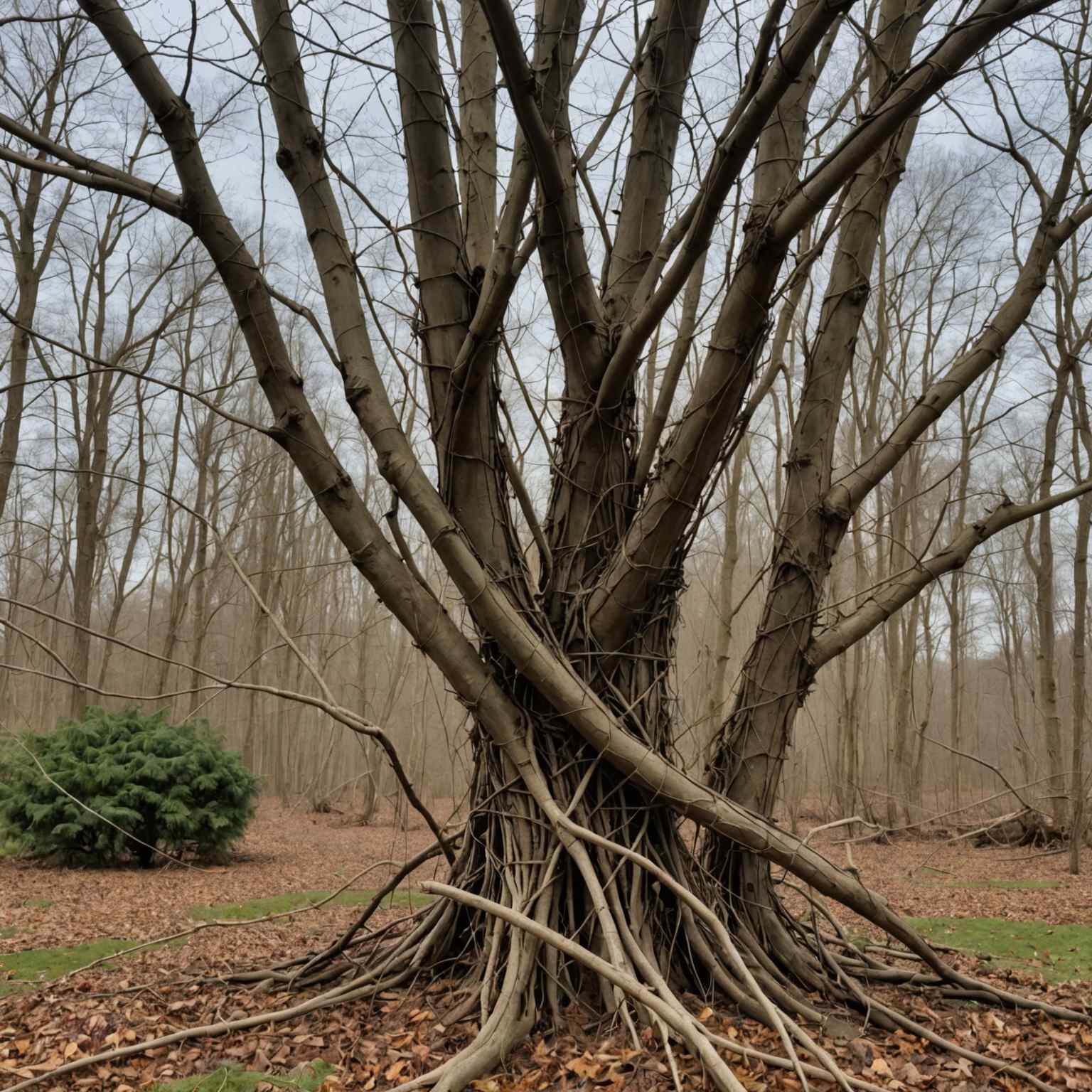
Being deciduous, Russian vine drops its leaves in autumn, revealing a tangled mass of bare woody stems with no ornamental value whatsoever. For six months of the year, you’re left with an ugly network of branches that still need managing.
Identifying Russian Vine
Russian vine has heart-shaped mid-green leaves on twining woody stems. From August to October, it produces masses of tiny white or pink-tinged flowers in large feathery panicles, giving rise to another common name: fleece flower.
The plant is sometimes confused with Japanese knotweed due to similar heart-shaped leaves and family resemblance. However, Russian vine is a climber with twining stems, while knotweed grows as upright canes. Russian vine flowers are white and feathery; knotweed flowers are creamy white in more compact clusters.
Other names for Russian vine include mile-a-minute, Chinese fleece vine, silver lace vine and Bukhara fleeceflower. You may also see it listed under older botanical names including Polygonum baldschuanicum and Bilderdykia baldschuanica.
Cutting Back Russian Vine
Before applying weedkiller, you need to reduce the top growth to manageable levels. This also makes treatment more effective, as the plant responds to hard pruning by drawing energy up from its roots, which then absorbs the herbicide more readily.
Cut all stems back to near ground level using loppers or a pruning saw for thicker woody growth. Established Russian vine develops substantial main stems that may require a bow saw. Remove as much top growth as possible and dispose of it. Russian vine can root from stem cuttings, so don’t leave cut material lying on soil.
For plants growing over structures, work methodically to untangle stems before cutting. The twining growth wraps tightly around supports and other plants, so removal takes time and patience.
Killing Russian Vine
Cutting alone won’t kill Russian vine. The extensive root system simply sends up new growth, often more vigorously than before. You need to kill the roots with a systemic weedkiller.
The most effective method is the cut-and-treat technique. Immediately after cutting stems back to stumps, apply concentrated glyphosate directly to the fresh cut surface. The plant draws the chemical down into the root system before it can seal the wound. For woody weeds like this, the strongest weed killer available gives the best results.
Use a gel formulation or paint undiluted glyphosate onto cut stumps with an old brush. Treat within minutes of cutting for best absorption. Larger stumps may need drilling with several holes and filling with concentrated weedkiller.
For regrowth that appears after initial treatment, allow new shoots to develop several leaves before spraying with glyphosate. The plant needs leaf area to absorb the chemical and transport it to the roots. Expect to need multiple treatments over one or two growing seasons to fully exhaust the root system. Triclopyr is particularly effective on woody plants and can be used as an alternative or in combination with glyphosate.
Digging Out the Roots
For smaller or younger plants, physical removal may be feasible. Russian vine develops a substantial woody rootstock, but unlike Japanese knotweed, the roots don’t typically spread far underground.
Dig around the main stem to expose the root crown. Cut through the main roots with a spade or mattock and lever out the rootstock. Check for any remaining root fragments and remove them, as pieces left behind may regenerate.
For established plants with thick woody stems, combining digging with chemical treatment gives the best results. Excavate what you can, then treat any remaining roots and regrowth with glyphosate.
Preventing Regrowth
Russian vine is persistent. Even after apparently successful treatment, new shoots may emerge from surviving root fragments. Monitor the area for at least two growing seasons and treat any regrowth promptly.
If the vine was growing against a structure, check for stems that may have rooted into cracks or gaps. These separate plants need individual treatment. Remove any rooted sections from walls or fences where possible.
Covering the area with heavy-duty membrane after treatment helps suppress regrowth and prevents light reaching any surviving roots. Weight down with bark mulch or gravel and leave in place for at least one full growing season.
When Russian Vine Comes From Next Door
Russian vine spreads readily across boundaries, and its vigorous growth means it can quickly colonise neighbouring gardens. You have the right to cut back any growth that crosses onto your property, but this doesn’t address the source.
If your neighbour’s Russian vine is causing problems, approach them diplomatically. Many people don’t realise how problematic the plant becomes. Offer to share information about control methods or suggest they contact a professional if the plant is well-established.
Unlike Japanese knotweed, Russian vine isn’t subject to specific legal controls. However, if it’s causing damage to your property, you may have grounds for a nuisance claim. Document the problem with photographs and keep records of any communications.
Should You Plant Russian Vine?
Despite its continued availability and RHS award, planting Russian vine is rarely advisable. The problems it causes far outweigh any benefits.
If you need fast coverage, consider less aggressive alternatives. Clematis montana grows quickly but is far easier to control. Star jasmine (Trachelospermum jasminoides) provides evergreen cover without the thuggish tendencies. Even vigorous roses are preferable to Russian vine.
If you’re buying a property with Russian vine already established, factor removal costs into your budget. Professional removal of a large established plant can cost several hundred pounds.
Frequently Asked Questions
Is Russian vine the same as Japanese knotweed?
No, though they’re related. Both belong to the Fallopia genus (knotweed family), but they’re different species. Russian vine is a climber; Japanese knotweed grows as upright canes. Knotweed is subject to legal controls; Russian vine currently is not.
Why is Russian vine still sold if it’s so problematic?
It remains popular for quickly covering unsightly structures, and it does produce attractive flowers. Many buyers don’t research its growth habits before planting. Some nurseries are now adding warnings, but the plant remains widely available.
How long does it take to kill Russian vine?
Expect the process to take one to two full growing seasons. Initial treatment kills most of the root system, but regrowth from surviving fragments is common. Persistent follow-up treatment is essential.
Will Russian vine damage my house?
Yes, potentially. The twining stems force their way into any gap and continued growth exerts pressure on structures. It can lift roof tiles, damage rendering, and work its way into timber structures. Keep it well away from buildings.
Can I compost Russian vine?
Not safely. Stem sections can root and regrow. Dispose of cut material through council green waste collection where industrial composting temperatures kill any viable plant material, or burn it if local regulations permit.
Don’t let Russian vine take over your garden. Start with a strong glyphosate weedkiller applied to cut stumps, and be prepared for follow-up treatment over the next growing season. For other problem climbers, see our guides to ivy and bindweed. For similar invasive species, our rhododendron ponticum guide covers another aggressive plant that requires persistent treatment.
Russian Vine Grows Back Faster Than You Can Cut It
A systemic weedkiller painted on fresh-cut stumps travels down to kill the entire root system.
