
Weeds Don’t Grow ON Your Paving – They Grow IN the Gaps
Every gap between your pavers is a potential home for weeds. Soil accumulates, seeds blow in, and before long you’ve got grass and dandelions sprouting through what should be a clean surface. Killing the visible weeds is only half the job – you need to address the gaps too.
Block paving looks fantastic when it’s clean – and terrible when weeds take hold. Those neat geometric patterns become an eyesore once grass, dandelions, and other opportunistic plants start pushing through the joints.
The frustrating thing is that weeds keep coming back. You pull them out, they return. You spray them, new ones appear. Understanding why this happens is the key to actually solving the problem rather than endlessly treating the symptoms.
Why Weeds Keep Coming Back
Weeds don’t grow on the paving itself – they grow in the gaps between blocks where conditions allow. Over time, the joints between pavers accumulate debris: dust, soil, decomposing leaves, and organic matter. This creates a growing medium, and weed seeds – which are constantly blowing around – find their way in and germinate.
Once a weed establishes roots in the gap, it anchors itself surprisingly well. The confined space actually protects the roots from complete removal, which is why hand-pulling often fails. You remove the top growth, but fragments of root remain wedged between the blocks and regrow.
If your paving has degraded jointing sand or no proper joint filler at all, the problem accelerates. Bare gaps fill with soil faster, and weeds establish more easily.
Common Paving Weeds
Block paving typically attracts many of the same common UK weeds that appear elsewhere – dandelions, grass, and various annual weeds that thrive in disturbed soil. The treatment approach is similar whether the weeds are in paving, gravel, or patios.
Killing Existing Weeds
Weed Killer
For established weeds in block paving, a systemic weed killer is the most effective solution. Glyphosate-based products are absorbed through the leaves and transported down to the roots, killing the entire plant including the portions hidden between the blocks.
Apply when weeds are actively growing and not stressed by drought. The foliage needs to be healthy to absorb the herbicide effectively. Most weeds will show signs of yellowing within a week or two and die back completely within three to four weeks.
Glyphosate won’t damage your paving – it only affects plants. Once the weeds have died, you can scrape out the debris and address the gaps to prevent regrowth.
For ongoing prevention, a residual weed killer creates a barrier that stops new seeds germinating for several months. This is particularly useful for driveways and paths where you want longer-term protection. For persistent perennial weeds pushing through the gaps, you may need the strongest weedkiller available.
Manual Removal
If you prefer to avoid chemicals, manual removal works – but only if you’re thorough.
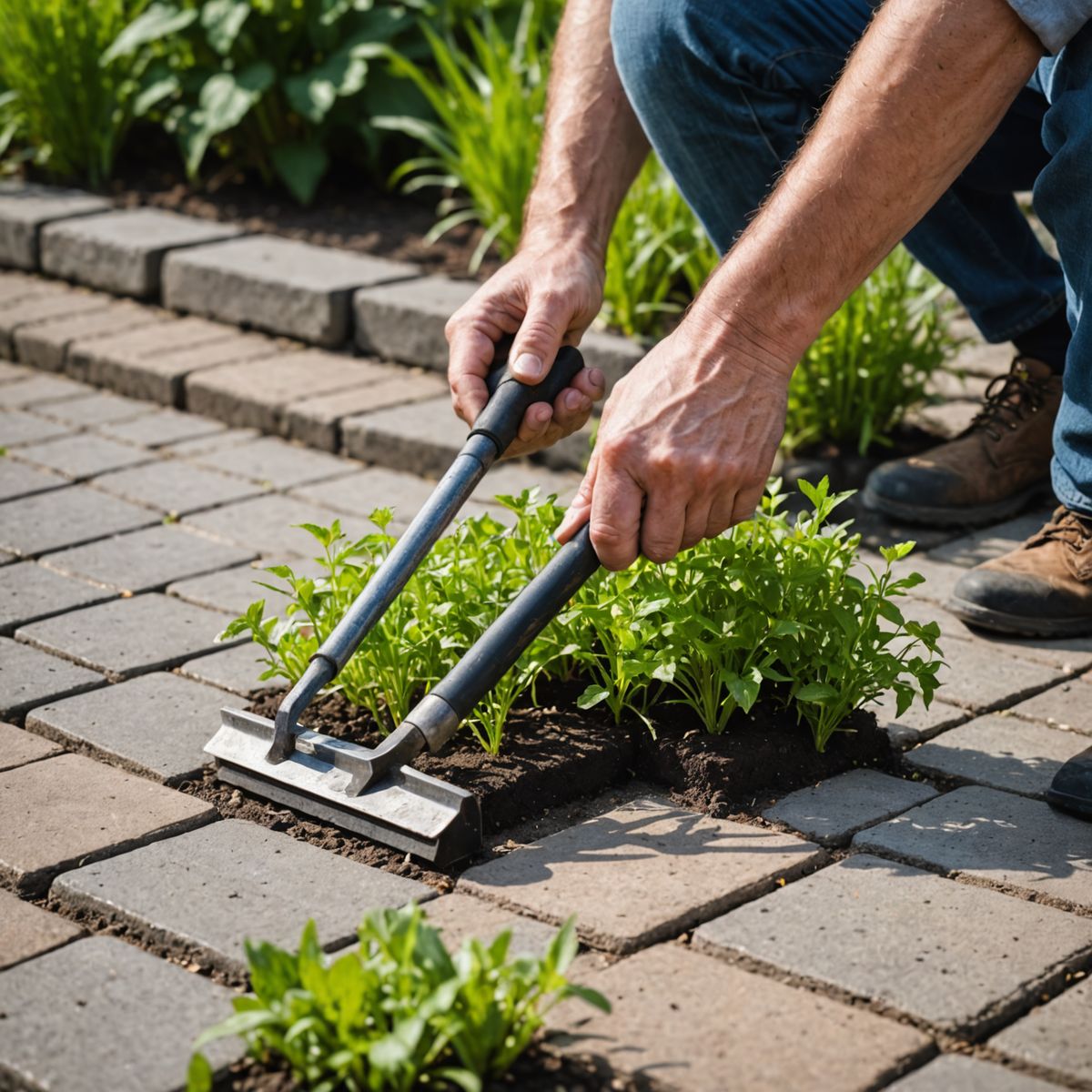
A block paving weeding knife or scraper is more effective than pulling by hand. These tools let you get into the gaps and scrape out not just the weeds but the accumulated soil they’re growing in. Work along each joint, removing all debris down to the base material.
This is labour-intensive for large areas but gives immediate results. The key is removing the growing medium, not just the visible weeds. If you leave soil in the gaps, new weeds will establish quickly.
For small infestations, simply pulling weeds by hand can work. Grab the stem as close to the base as possible and pull slowly to extract as much root as you can. Do this when the soil is moist – the roots come out more easily.
What About Home Remedies?
Vinegar, salt, and boiling water can kill or damage small, weak weeds, but none of them match the effectiveness of proper weed killer.
Vinegar burns the foliage it contacts but doesn’t affect roots – the weeds regrow. Salt works slowly and requires large quantities for any real effect. Boiling water kills what it touches but is impractical for anything more than a handful of weeds.
Avoid bleach entirely. It’s a poor weed killer and can stain or damage certain types of paving.
Stopping Weeds Coming Back
Killing existing weeds is only half the solution. To actually stop weeds permanently, you need to address the gaps where they grow.
Clean the Joints
Once you’ve killed or removed the weeds, scrape out all the accumulated debris from between the blocks. You want to get down to clean, solid material – not leave soil sitting in the gaps waiting for new seeds.
A stiff brush and a paving scraper handle most jobs. For heavily neglected paving, you may need to work along every joint systematically.
Refill with Jointing Sand
Kiln-dried sand is the standard choice for refilling paving joints. Brush it into the gaps, working it down until the joints are full. The sand compacts to create a stable joint that resists weed establishment better than bare gaps or degraded old sand.
For better weed resistance, polymeric jointing sand hardens when moistened and creates a more solid barrier. It’s more expensive than standard kiln-dried sand but lasts longer and provides better protection against both weeds and ant colonisation.
Consider Sealing
A breathable paving sealer reduces water absorption and makes it harder for organic matter to accumulate in the joints. Sealed paving stays cleaner, and any weeds that do appear are easier to remove because their roots can’t penetrate as effectively.
Sealing also protects against moss and algae growth and makes general cleaning easier. It’s an investment, but for driveways and patios you want to keep looking good, it pays off over time.
Regular Maintenance
The simplest prevention is regular brushing. Sweep your paving monthly to remove leaves, soil, and debris before it accumulates in the joints. This takes minutes but prevents the conditions weeds need to establish.
Deal with any weeds immediately when they appear. A single small weed is easy to remove – an established infestation is a bigger job.
A Note on Pressure Washing
Pressure washers clean paving effectively but can cause problems if used carelessly. High pressure dislodges jointing sand, damages the surface of softer blocks, and can undermine the sand bed beneath the paving over time.
If you pressure wash, use a lower setting and hold the lance at an angle rather than perpendicular to the surface. Better yet, use a paving cleaner and a stiff brush for regular cleaning, reserving the pressure washer for occasional deep cleans.
Common Questions About Paving Weeds
What kills weeds in block paving permanently?
No single treatment kills weeds permanently – seeds constantly blow in from elsewhere. However, killing existing weeds with a systemic herbicide, cleaning out the joints thoroughly, and refilling with jointing sand creates conditions where new weeds struggle to establish. Regular maintenance keeps the problem manageable.
Does salt kill weeds on block paving?
Salt can kill small, weak weeds over time, but it’s slow-acting and you need substantial quantities for any real effect. It won’t touch established perennial weeds with deep roots. For block paving, a proper weed killer is faster, more effective, and more economical.
Will vinegar damage my pavers?
Household vinegar won’t damage most block paving. However, it’s a poor weed killer – it burns foliage but doesn’t affect roots, so weeds regrow. You’d need to apply it repeatedly to the same weeds, which makes it impractical for anything beyond the smallest infestations.
Should I pressure wash block paving?
Pressure washing cleans effectively but can damage paving if overdone. High pressure removes jointing sand, erodes block surfaces, and can wash away the sand bed beneath the paving. Use lower pressure settings, hold at an angle, and don’t pressure wash more than necessary.
How do I stop weeds growing between pavers?
Keep the joints filled with sand so there’s no space for soil to accumulate. Brush the paving regularly to remove debris before it breaks down into growing medium. Deal with any weeds immediately when they appear. For maximum protection, use polymeric jointing sand or seal the paving.
Block paving weeds exploit every gap where soil can accumulate. Pulling removes the top growth while the roots stay wedged between the blocks. A systemic weedkiller travels down to kill the entire plant – including the parts you can’t reach with a scraper.
Tired of Weeds Pushing Through Your Paving?
Kill them at the root with one application. No regrowth, no repeat treatments, no damage to your blocks.

Sealants .what do I use ,?
Kiln dried sand is a good one