
Horsetail Has Been Around for 300 Million Years. Its Roots Go Two Metres Deep.
This prehistoric weed survived the dinosaurs, and it’s not going to give up your garden without a fight. The waxy stems resist weedkillers, and the roots go deeper than you can dig. Here’s how to actually make progress.
Horsetail (also commonly called mare’s tail) is unlike any other common UK weed in your garden. It’s a living fossil, a plant that predates the dinosaurs by hundreds of millions of years. The same species that once grew alongside giant ferns in prehistoric swamps is now pushing through your patio, and it brings all that evolutionary resilience with it.
What makes horsetail so frustrating isn’t just its persistence. It’s that the usual methods simply don’t work. Pull it and you’ve removed a fraction of the plant. Spray it and the weedkiller beads off the waxy stems. Dig it and you’ll never reach the bottom of those two-metre-deep roots. Understanding why horsetail is so difficult is the first step to actually controlling it.
Why Horsetail (Mare’s Tail) Is So Hard to Kill
| Method | How It Works | Timeline |
|---|---|---|
| Bruise + glyphosate spray | Crush stems to break silica coating, then spray systemic herbicide | Multiple applications over 2 to 3 years |
| Repeated cutting | Remove all green growth to exhaust deep root energy reserves | 2 to 3 years of consistent effort |
| Smothering (heavy membrane) | Block all light with lightproof membrane, starves the roots over time | 2 to 3 years under cover |
| Improving drainage | Make soil less hospitable with drier, less compacted conditions | Ongoing, supports other methods |
| Digging / hand pulling | Remove top growth only. Roots are too deep to fully extract | Ineffective alone |
Horsetail has survived mass extinctions, ice ages, and 300 million years of evolution. It’s built to endure.
The root system is the main problem. Horsetail spreads through underground rhizomes, dark, wiry stems that can penetrate two metres deep into the subsoil. These rhizomes store enough energy to regenerate the entire plant even when the top growth is repeatedly removed. Dig out what you can see, and there’s still a vast network beneath waiting to send up new shoots.
This deep root system puts horsetail in the same category as other notoriously difficult weeds like bindweed, ground elder, Japanese knotweed, wild garlic, and bracken. All require persistence and the right approach.
The stems present another challenge. Unlike most plants, horsetail stems are coated in silica, the same mineral found in glass. This gives them a waxy, moisture-resistant surface that causes glyphosate and other contact weedkillers to bead up and roll off rather than being absorbed. It’s like trying to paint a candle.
Horsetail also reproduces in two ways. In spring, it sends up pale, asparagus-like fertile stems topped with cone-shaped structures that release millions of spores into the wind. Later, the familiar green bottle-brush stems appear, photosynthesising and feeding energy back down to those deep roots. Even if you never see a spore, the rhizomes spread sideways underground, sending up new shoots metres away from the parent plant.
Identifying Horsetail (Mare’s Tail)
Horsetail (Equisetum arvense) is easy to recognise once you know what to look for. The green stems grow 30 to 60 cm tall in dense patches, with a distinctive segmented structure. Each stem is made up of hollow sections joined together like a telescope. From each joint, whorls of thin, needle-like branches radiate outward, giving the plant its characteristic bottle-brush or miniature fir tree appearance.
The stems feel rough and gritty when you rub them, and that’s the silica content. In early spring, before the green stems appear, you might notice pale brown fertile shoots that look like small asparagus spears, each topped with a spore-producing cone.
A note on names: many gardeners call this weed mare’s tail, but technically mare’s tail (Hippuris vulgaris) is an entirely different aquatic plant with smooth, unbranched stems. However, the name mare’s tail is so commonly used for horsetail that you’ll find both terms used interchangeably. If you’re searching for how to kill mare’s tail, this is almost certainly the weed you’re dealing with.
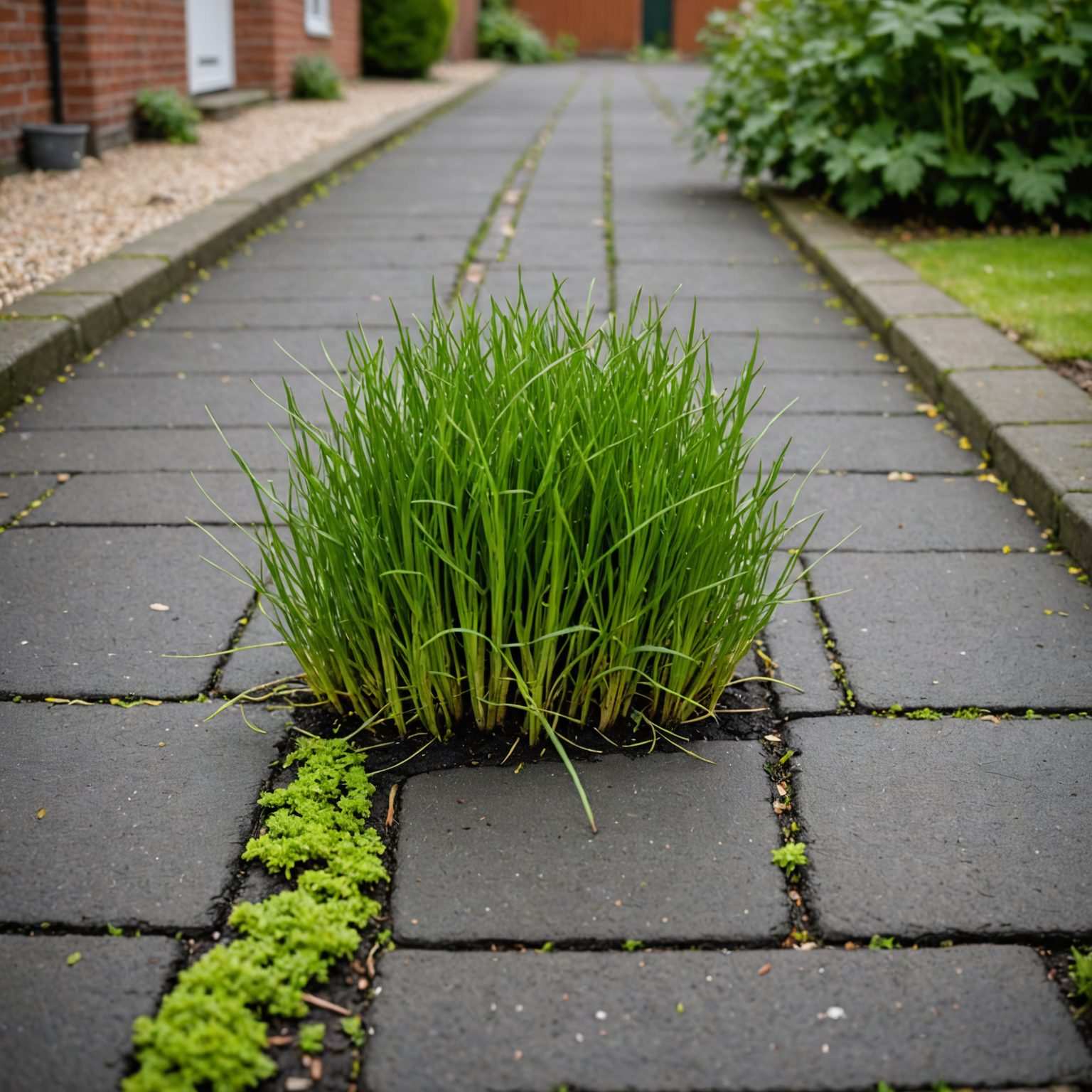
Horsetail thrives in damp, poorly-drained soil but can establish almost anywhere. It’s commonly found in borders, lawns, allotments, and is notorious for pushing through tarmac, paving, and even concrete where there’s the slightest crack.
How to Get Rid of Horsetail (Mare’s Tail)
Be realistic: horsetail is one of the most difficult weeds to eradicate completely. But you can control it, weaken it over time, and prevent it from taking over. Most successful approaches combine several methods.
Repeated Cutting
Every time you remove the green stems, you force the plant to use energy from its root reserves to regrow. Do this consistently, cutting or pulling new shoots as soon as they appear, and you gradually exhaust those reserves. This won’t eliminate horsetail in a single season, but over two to three years of persistent effort, you’ll see the growth weaken significantly.
In lawns, regular mowing achieves the same effect. The key is consistency. Let the shoots grow tall and they’ll replenish the roots instead of depleting them.
Weedkiller (With Preparation)
Glyphosate-based weedkillers can work on horsetail, but only if you help them penetrate those waxy stems. Before spraying, bruise or crush the stems by treading on them, rolling them with a heavy object, or rubbing them between your hands. This damages the silica coating and allows the herbicide to be absorbed.
Spray when the plant is actively growing (late spring through summer) for best uptake. A systemic weedkiller is essential. It travels through the plant to the roots rather than just killing what it touches. Expect to need multiple applications over successive seasons. Horsetail won’t die from a single treatment.
For established infestations, you may need the strongest weedkiller available combined with stem bruising for best results.
Smothering
Blocking light completely can eventually kill horsetail by preventing photosynthesis and starving the roots. Cover the affected area with heavy-duty black landscape membrane, weighted down securely, and leave it in place for at least two to three years.
This method requires patience but works well for areas you can take out of use temporarily. The membrane must be lightproof. Horsetail can push through standard weed fabric. Check periodically for any shoots finding their way around the edges. The same smothering technique works well for controlling bamboo, another deep-rooted spreader.
Improving Drainage
Horsetail (mare’s tail) favours damp, compacted, poorly-drained soil. Improving your soil conditions won’t kill existing plants, but it makes the environment less hospitable for new growth. Add organic matter to improve structure, aerate compacted areas, and address any drainage issues. Combined with other control methods, this helps tip the balance against horsetail over time.
Will 30% Vinegar Kill Horsetail?
No. Even industrial-strength horticultural vinegar (20 to 30% acetic acid) won’t kill horsetail. Vinegar is a contact herbicide, meaning it only burns the plant tissue it touches. It will scorch the visible stems but cannot reach the deep rhizome network that regenerates the plant.
The silica coating on horsetail stems also reduces how much vinegar actually penetrates the plant tissue. Even if you bruise the stems first and apply concentrated vinegar, the roots at two metres deep remain completely unaffected.
Standard household vinegar (5% acetic acid) is even less effective. You might see temporary browning of the stems, but new growth will appear within days. Boiling water, salt, and bleach all have the same limitation. They damage the surface but leave the root system intact.
For horsetail, a systemic herbicide (glyphosate) is the only chemical option that can travel down to the roots. And even that requires stem bruising and multiple applications.
How Long Does It Take to Kill Horsetail?
Realistically, expect two to three years of consistent effort to bring a horsetail infestation under control. Complete eradication may take longer, and in some cases the weed returns after several clear years if any rhizome fragments survive deep underground.
Here’s what a realistic timeline looks like:
Year one: Begin the bruise-and-spray programme in late spring. Apply glyphosate to bruised stems every four to six weeks during the growing season (May through September). You should see reduced regrowth by late summer, but the plant will return the following spring.
Year two: Continue the same programme. Growth should be noticeably weaker, with fewer shoots and smaller stems. Keep cutting any new growth between spray applications to drain root energy.
Year three: By this point most infestations are significantly weakened. You may see only occasional shoots that can be spot-treated. Continue monitoring and treating any regrowth promptly.
If you’re using the smothering method instead, the membrane needs to stay in place for the full two to three years before you can assess whether the roots have been exhausted.
Horsetail in Specific Situations
Horsetail in Lawns
Treating horsetail in a lawn is tricky because glyphosate kills grass too. Your options are either to spot-treat individual horsetail stems carefully using a gel applicator (to avoid contact with the surrounding grass), or to accept that regular mowing will gradually weaken the horsetail over several seasons without chemicals.
If the infestation is severe, you may need to sacrifice the affected patch of lawn, treat the horsetail aggressively, and reseed once it’s under control. For advice on establishing new grass, see our guide on how long grass seed takes to grow.
Horsetail in Paving and Driveways
Horsetail pushing through cracks in paving, tarmac, or concrete is a common sight. The shoots exploit the smallest gaps and can even lift loose slabs. Spray the emerging stems with glyphosate (bruise them first), and fill or seal the cracks to limit regrowth points. For weeds in patio cracks, a combination of chemical treatment and physical sealing gives the best results.
Horsetail Spreading from Neighbours
Horsetail rhizomes don’t respect boundary lines. If your neighbour has horsetail, it can spread underground into your garden. Installing a vertical root barrier (heavy-duty HDPE liner) along the boundary to a depth of at least one metre can help block the rhizomes. This is the same approach used to contain spreading bamboo.
What Doesn’t Work on Mare’s Tail
Hand pulling alone won’t eliminate horsetail. The roots are simply too deep. You might remove the top growth, but the rhizomes remain. It’s still worth doing as part of a combined approach, just don’t expect it to solve the problem.
Vinegar, salt, and boiling water kill the visible growth but don’t reach the root system. The horsetail will regrow from below.
Single applications of any weedkiller rarely work. The waxy coating and deep roots mean horsetail needs repeated treatments over multiple seasons.
For more information on controlling persistent weeds, visit our weed control hub or browse the best weed killers for UK gardens.
Frequently Asked Questions
Why is horsetail (mare’s tail) so hard to kill?
Horsetail has roots that go two metres deep, stems coated in waxy silica that repels weedkillers, and the ability to regenerate from tiny root fragments. It’s been evolving these defences for 300 million years.
How deep do horsetail roots go?
Horsetail rhizomes can penetrate up to two metres into the subsoil. This is far deeper than most garden digging reaches, which is why the plant keeps returning after removal attempts.
Will glyphosate kill horsetail?
Glyphosate can control horsetail, but you need to bruise or crush the stems first to help it penetrate the waxy coating. Expect to need multiple applications over two to three years for significant control.
Is horsetail the same as mare’s tail?
In common usage, yes. Most gardeners use the names interchangeably for the same weed (Equisetum arvense). Technically, mare’s tail (Hippuris vulgaris) is a different aquatic plant, but when people search for how to kill mare’s tail, they almost always mean horsetail.
How long does it take to get rid of horsetail?
Complete eradication typically takes two to three years of consistent effort using combined methods. Horsetail won’t disappear in a single season, but persistent control will progressively weaken it.
Will vinegar kill horsetail?
No. Vinegar only burns the visible stems and cannot reach the deep root system. Even industrial-strength horticultural vinegar (20 to 30% acetic acid) has no lasting effect on horsetail. The silica coating on the stems further reduces vinegar’s effectiveness.
Can I dig out horsetail?
Digging removes the top growth and some shallow roots, but the rhizomes extend up to two metres deep. You’ll never reach them all by digging. Worse, any root fragments left behind will regenerate into new plants. Digging is best used alongside other methods to weaken the plant over time.
Does horsetail die in winter?
The above-ground stems die back in autumn, but the roots remain alive and dormant underground throughout winter. New shoots will emerge the following spring from the same rhizome network. Winter provides no opportunity for control since there is no visible growth to treat.
Horsetail (mare’s tail) tests your patience like no other weed. The waxy stems, the endless roots, the way it shrugs off everything you throw at it. Bruising the stems before spraying helps the weedkiller penetrate, and a systemic formula reaches the root network that your spade never will.
The Waxy Stems. The Endless Roots. The Way It Shrugs Off Everything.
Bruise the stems first, then let a systemic weedkiller travel down to the root network your spade can never reach.

Very helpful, but would be great to know if you should cut down the horsetail before spraying with herbicide.
It depends on the size of the infestation. I would apply, cut down, then re-apply as needed